Quick Answer
Dental implants in London, ON are small titanium posts placed in the jaw to anchor a replacement tooth, bridge, or denture. Good candidates have healthy gums and enough bone, though bone grafting can help those who do not. At Esthene Dental Centre, the process typically spans consultation, placement, healing, and the final restoration, with cost shaped by how many teeth you are replacing.
Losing a tooth changes more than your bite. It can make you cover your mouth when you laugh or choose softer foods to avoid an awkward moment. For many patients exploring dental implants in London, ON, the real goal is simpler than it sounds: feeling like yourself again. At Esthene Dental Centre on Waterloo Street in North London, implant care is built around restoring that quiet confidence through precise, conservative treatment that protects your remaining healthy tissue.
What Exactly Is a Dental Implant?
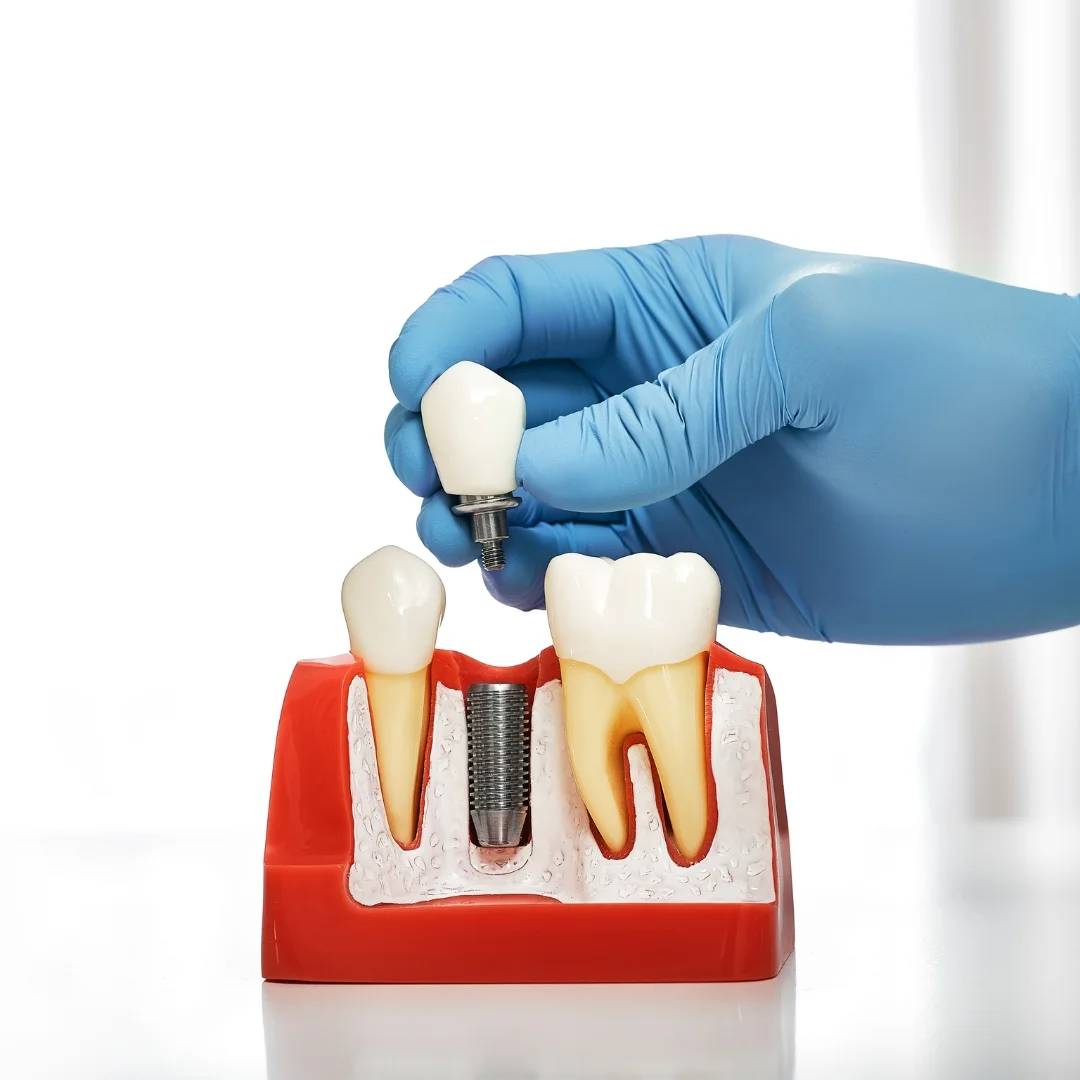
A dental implant is a titanium post that functions as an artificial tooth root. Specifically, your dentist places it in the jawbone, where it fuses with the bone over several weeks. According to the Canadian Dental Association, this fused post then supports a crown, bridge, or denture that looks and works like a natural tooth.
Consequently, the result feels stable rather than removable. Furthermore, because an implant stands on its own, your neighbouring teeth stay untouched. That conservative advantage matters, since a traditional bridge usually requires reshaping healthy teeth on either side of a gap.
How Implants Protect Your Smile and Self-Esteem
A missing tooth often triggers slow bone shrinkage beneath the gap. However, an implant stimulates the bone much like a real root does, which helps preserve your facial shape over time. Additionally, a well-matched crown restores the symmetry people notice first when you speak or smile. The emotional payoff is real, and it is frequently the reason patients finally book the consultation.
Am I a Good Candidate for Dental Implants?
Most healthy adults with one or more missing teeth qualify for implants. Specifically, you need firm gums and sufficient jawbone to hold the post securely. During your visit, our team uses X-rays and digital imaging to measure bone volume and map the ideal placement.
If your bone has thinned after a long-standing gap, you still have options. For instance, bone grafting can rebuild the ridge before placement. A 2023 review in Periodontology 2000 notes that careful patient selection meaningfully reduces complications during these augmentation procedures. Therefore, a thorough assessment protects both your comfort and your long-term results.
Smokers and patients with uncontrolled gum disease may need preparatory care first. However, these situations rarely rule implants out entirely. Instead, they shape a sensible treatment order so the foundation is solid before anything permanent goes in.
What Does the Dental Implant Process Involve?
The implant process unfolds in clear, manageable stages rather than a single marathon appointment. First, you attend a consultation that includes imaging and a candidacy review. Next, your dentist places the titanium post during a focused procedure. For anxious patients, oral sedation can make the appointment feel calm and unhurried.
After placement, healing begins. Typically, the bone fuses to the implant over a few months, a process called osseointegration. Afterward, your dentist attaches an abutment and the final crown, bridge, or denture. Research in the International Journal of Prosthodontics reports strong implant and prosthesis survival rates across different restoration designs, which reflects how predictable the technique has become.
Implants Versus Other Tooth Replacement Options
Implants are not the only path, and honesty about alternatives matters. A fixed bridge works well in some cases, while modern dentures suit others beautifully. For patients replacing several teeth, implant-supported dentures blend the stability of implants with the coverage of a full-arch solution. A 2025 analysis in the Dentistry Journal stresses that treating the original cause of tooth loss, such as periodontal disease, is essential before any replacement. Consequently, your plan addresses the root issue, not just the visible gap.
How Much Do Dental Implants Cost in London, ON?
Implant cost depends on how many teeth you are replacing, whether grafting is needed, and the final restoration chosen. Because every mouth differs, a personalized estimate beats any ballpark figure. The Ontario Dental Association encourages patients to request a written treatment estimate before starting, so you know the full scope upfront.
Affordability is a core focus at our practice. Specifically, Esthene Dental Centre accepts the Canadian Dental Care Plan, offers flexible payment plans, and provides direct insurance billing. As a result, the path to a confident smile stays within reach for more London families.
Frequently Asked Questions
How long do dental implants last?
With good oral hygiene and regular checkups, implants can last many years, and often decades. Consequently, daily brushing, flossing, and routine cleanings protect your investment and surrounding periodontal health.
Does getting a dental implant hurt?
The placement is done under local anesthetic, so the procedure itself is comfortable. Additionally, oral sedation is available for nervous patients, and most people manage any after-surgery tenderness with simple pain relief.
Can I get an implant if I lost a tooth years ago?
Often, yes. However, older gaps sometimes lose bone, so you may need grafting first. A quick imaging review at our London office confirms your options.
Will the Canadian Dental Care Plan help with cost?
Coverage varies by treatment and eligibility. Therefore, our team reviews your benefits and estimates directly with you, so there are no surprises before care begins.
Ready to Rebuild Your Confident Smile?
You deserve to eat, speak, and smile without second-guessing. If you are weighing dental implants in London, ON, our experienced team will walk you through candidacy, timing, and cost in plain language. Contact Esthene Dental Centre today to book a consultation at our Waterloo Street office, with convenient evening hours available.
Sources & References
- Canadian Dental Association, “Dental Implants”
- Ontario Dental Association, “Dental Treatment Estimates”
- Different Interventions for Rehabilitation of the Edentulous Maxilla with Implant-Supported Prostheses (Int J Prosthodont, 2021)
- The Decision Between Tooth Retention or Replacement with Implants (Dent J, 2025)
- Complications and Treatment Errors in Peri-Implant Hard Tissue Management (Periodontol 2000, 2023)